

Summary
Nicotine pouches are showing up everywhere in fire stations—and they’re often marketed as a “safer” alternative to smoking or chewing tobacco. But are they really risk-free?
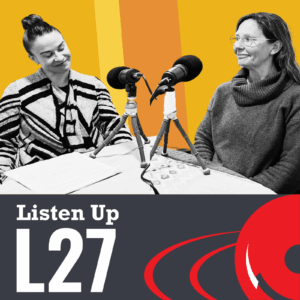
In this episode of Listen Up L27, host Jen Pennington is joined by Dr. Marcie Hamrick and mental health professional Jamie Epting from Station 2 Clinic to break down what nicotine pouches do to the body and brain. They talk about addiction, sleep disruption, anxiety, cancer risk, and why these products are so appealing in fire fighter culture. The conversation also explores harm reduction, quitting strategies, and how awareness—not shame—can be the first step toward change.
Transcript
Pull quote:
[00:00:02] Dr. Marcie Hamrick: I feel like it’s important for people to know that nicotine is not risk free, that there’s dangers of addiction and there’s the potential to exacerbate health issues that you’re already at higher risk for in terms of cancers and sleep deprivation and cardiovascular risks. So all of that make using nicotine a risky choice.
Introduction:
[00:00:28] Jen Pennington: It’s Jen Pennington from listen up L27. And today we are going to be talking about nicotine pouches. And I have here with me Dr. Marcie Hamrick, who is the medical director for Station 2 Clinic. And I also have Jamie Epting, who is the mental health professional from Station 2 Clinic as well. So this affects your emotional well being and how this affects your physical well being as well here today. Dr. Hamrick, you know, we’re seeing more of these nicotine pouches showing up in the fire stations.
And for those who may not be familiar, can you start by explaining what these pouches are and why they become so popular?
[00:01:09] Dr. Marcie Hamrick: Yeah. So they are small, tobacco free pouches that contain nicotine, often with flavorings and maybe some other chemicals thrown in for good measure like heavy metals and formaldehyde.
And people place them under the lip and delivers a steady stream of nicotine through the mucosa of the mouth, right into the bloodstream.
So I think that they are gaining popularity because they’re easy to use. Like people aren’t having to spit into something.
They are marketed as safer alternative to smoking or tobacco use.
And, and they are stimulants. So they temporarily increase the feeling of alertness and focus and reduce reaction time.
So I think for those reasons it’s pretty appealing to firefighters.
[00:02:06] Jen Pennington: And Jamie, so what’s going on in the brain when you take one of these?
[00:02:10] Jamie Epting: Well, nicotine pouches releases dopamine and we know that a lot of firefighters struggle with dopamine regulation. So I would imagine that getting that hit of dopamine or that steady stream of dopamine probably feels pretty good.
The other side to this is it does also spike adrenaline.
And firefighter culture and service is highly adrenaline seeking.
And what I would imagine happens is that it can also increase anxiety, especially over time.
[00:02:47] Jen Pennington: And so when we talk about why, why there are so many firefighters who see them now as like the safer alternative to chewing tobacco, say, you know, can you give me your thoughts on that, Marcin?
[00:03:01] Dr. Marcie Hamrick: Yeah, I think we don’t have good long term studies about the effects of nicotine pouches versus tobacco, but we do know that nicotine pouches do contain carcinogens that can increase the Risk of cancer and because they increase the heart rate and blood pressure, increase cardiovascular event like heart attack and stroke risk, but we just don’t have the long term data necessarily to guide that.
But I will say, I think one of the more harmful effects on people, but firefighters in particular, is the effect on energy levels and sleep. I think that that addictive cycle that Jamie was referring to about getting that adrenaline, and they feel more focused, they feel ready for performance with that quicker reaction time.
But then their energy level crashes when the effects wear off and they use it again.
It begins this cycle of dependence and then also reduces the quality and amount of sleep. A lot of times, sometimes unbeknownst to the person, they don’t know why they’re not sleeping well, but it’s because they are either still under the influence of the nicotine or they are withdrawing from the nicotine, which causes anxiety and irritability, which keeps them from sleeping. So it’s such a vicious cycle of getting tired, needing it for energy, crashing, and then not really being able to get the rest that they need.
[00:04:38] Jen Pennington: And then, you know, it says to me, you know, we’re always trying to get people to have better sleep.
But, you know, you’re working the night shift, you’re trying to get some sleep, and all of a sudden you get the call, or maybe you get three calls in the night, and now you’re waking up every time and you’re probably putting something in your mouth to give you that little hit and whatnot. And I just, that’s gotta just kill you the balance in your system completely.
[00:05:08] Dr. Marcie Hamrick: I think about the poor adrenal glands. Cause it’s like fake energy. Nicotine is like demanding energy from the adrenal glands when there’s not enough restorative factors like sleep to actually give energy. So it’s like squeezing blood from the turnip or whatever is the expression.
[00:05:28] Jen Pennington: But it’s better than smoking, right?
[00:05:31] Dr. Marcie Hamrick: That is the belief. That is the belief.
You know, I think because it’s not inhaled, it’s true that it doesn’t have the same effect on the risk of lung disease. But again, because they often contain heavy metals and carcinogens, I think the jury’s still out on the cancer risk long term. And I don’t think that people are steering clear of it entirely by choosing nicotine versus cigarettes.
[00:05:59] Jamie Epting: It’s still also getting into the bloodstream through your oral, you know, cavity and all. And that is like a main way that our body absorbs nutrients. And so I would imagine there’s also like a Whole host of dental things that come in with.
And also even your gut microbiome, too, because it’s something that your body is processing through the mouth.
[00:06:25] Dr. Marcie Hamrick: So that’s absolutely correct. Yes, we know that.
Even though, again, it’s not tobacco. It causes irritation in the gums that can cause gum disease, which nobody wants, but it actually causes chronic irritation that can lead to changes that cause gum cancer and throat cancer. And firefighters are already at higher risk of mouth and throat cancer.
[00:06:51] Jen Pennington: We’ve been talking about.
Just prior to taping this, we were talking about the Zynfluencers. And, you know, we see this on the BRO podcasts, sort of promoting the Zyn products and whatnot. And you were just telling me something really interesting that I hadn’t heard.
[00:07:12] Dr. Marcie Hamrick: Yeah, someone shared something. It’s like cats out of the bag.
Someone shared that people, like, marketing people dropped off boxes of Zyn at the fire station saying, thank you for your service.
And it just feels like an abomination to me that that would be happening. It’s like dropping off cancer at the door of the fire station and saying, here, here. Thank you for your service.
It does seem it should be met with the middle finger.
[00:07:45] Jen Pennington: Incredible. I mean, you’ve got to just look at that and go, yeah, no, I take cookies over that. Maybe.
[00:07:56] Dr. Marcie Hamrick: Still not awesome, but probably better. Still not awesome, but yeah.
[00:08:00] Jen Pennington: And, I mean, from your point of view, Jamie, what do you think about this? I mean, it seems to be. It’s pervasive in the culture now. It’s not even just the firefighters. It’s like young college students trying to have that little extra hit for staying up for exams or studying and things like that. What’s your take on?
[00:08:23] Jamie Epting: I mean, there’s definitely.
Everything can be chalked up to culture. Right. So how we’re influenced has to do with culture that we’re in the people that we surround ourselves with, the images and the things that we see throughout the day.
When I think about firefighters using Zyn, as opposed to maybe some other alternatives in the past, I’d say, yeah, Zyn is definitely a harm reduction from other ways that people in the fire service used to cope.
That being said, I always think that, like, the body is trying to find equilibrium, and so Zyn might be that way, that it’s seeking out. Our body is seeking out something, and maybe there’s something missing. And so Zyn might feel like it’s, you know, hitting that void, which I do think should be validated. Like, there’s a reason why people take it. There’s a reason why it feels good.
The fire service is not great with allowing people to sleep, allowing people to have great mental health. There’s a lot of components here that gives me a reason to believe, like, yeah, Zim would be.
I don’t want to say natural, but like, yeah, it fits in well with fire culture.
[00:09:34] Dr. Marcie Hamrick: Very tempting.
[00:09:34] Jamie Epting: Very tempting.
[00:09:36] Dr. Marcie Hamrick: Yeah.
[00:09:38] Jamie Epting: That being said, I also think there’s probably, you know, maybe even a little bit of shame or guilt that could come up with being dependent on something like Zyn with anything that, you know, is not probably entirely great for you.
[00:09:53] Jen Pennington: So I’ve often heard that it can be actually harder to quit Zinn than chewing tobacco or cigarettes. I mean, but I’ll start with Dr. Hamrick.
[00:10:07] Dr. Marcie Hamrick: Yes. I’ve heard that nicotine dependence can be as difficult to quit than heroin.
[00:10:16] Jen Pennington: Wow.
[00:10:16] Dr. Marcie Hamrick: And that the doses of nicotine in these pouches can exceed that of cigarettes. And they’re also just easy to use one after the other. So sometimes people’s total dose is higher, and therefore their use and dependence and the intensity of withdrawal are all greater as well.
[00:10:36] Jen Pennington: Somebody says trying to reduce the amount that they’re doing or, you know, trying to quit completely, it can be tough. But are there some steps you think or that they should be thinking about?
Jamie?
[00:10:52] Jamie Epting: I guess, like, the first thing I would think about is what are some areas that could be kind of amped up. So could you work on sleep hygiene? Is that doable? Could you work on exercise and motivation?
Maybe even trying to see if there’s anything deeper here? Is there something like a trauma or grief that might, you know, be exacerbating your desire to use in.
So going to see a therapist or talking to people close to you to kind of get some of that anxiety out.
Another piece I’m wondering about, I suppose, is the ability to quit, I would imagine also has to do with the culture as well.
Right.
And maybe there’s not this huge motivation to quit Zyn because the, the difficulty is there, but also that it’s more socially acceptable versus something like heroin, where maybe not as socially acceptable and the damage that heroin can do right away is very obvious. But I think Zyn is more of a long term stretch, so I think about all those things. So, like, who’s your support system? Can you replace Zyn with something different? I know people who have tried flavored toothpicks.
It’s not going to give you the same dopamine hit, obviously, but it could be something that you do that you put in your mouth, that there’s still that oral fixation that can give you some dopamine?
Could you play a game with your colleagues, something that can distract you?
Could you do on and off one day where you’re lowering the amount that you’re using? So a little bit of harm reduction there.
[00:12:37] Jen Pennington: Any thoughts to add to that?
[00:12:39] Dr. Marcie Hamrick: Yeah, I think one of the first things to do when you’re thinking of changing a behavior is thinking about why you want to quit.
There are the benefits, which are the reasons why you’re using. It helps you feel more awake. When you’re feeling tired. It may help you feel focused. So there are those good things.
And then when you think about the, the negatives, it’s important to think of what negative is important to you, like what is your why of quitting and then also how you would want to quit. And maybe if you’ve tried before, you’ve learned from that experience of what’s helpful or what’s not helpful.
But different strokes for different folks. Like sometimes people can cold turkey it and you know, have a handful of hard days and then be fine.
Other times people wean really slowly over time and that’s totally cool.
There are medications that can be used temporarily to really offset the withdrawal symptoms. So I think, you know, I don’t think it is a weakness at all to use a medication to help transition people from using to not using.
And overall the, you know, health benefits of quitting are certainly worth it. So thinking of how you’d want to quit is also important, I think.
[00:14:04] Jen Pennington: So if you could have one message each of you, for every firefighter who is using these nicotine pouches right now and their long term health, what would it be?
[00:14:17] Dr. Marcie Hamrick: Ooh, I’ll say that I feel like it’s important for people to know that nicotine is not risk free, that there’s dangers of addiction and there’s the potential to exacerbate health issues that you’re already at higher risk for in terms of cancers and sleep deprivation and cardiovascular risks. So all of that make using nicotine a risky choice. Can you beat that? It’s a game.
[00:14:48] Jen Pennington: Now see, this is what you guys.
[00:14:50] Dr. Marcie Hamrick: Can do at the table.
[00:14:52] Jen Pennington: One up each other. Here we go.
[00:14:55] Jamie Epting: That’s great. Competition never hurt anyone.
I, I suppose my first thought would just be building self awareness. You know, is this something that you want to use for the rest of your life? Are there people in your life who, you know you’re a role model too?
I think about even like children, they’re gonna see you doing this thing and you’re, they’re gonna be more likely to do it.
I also want to, like, reduce the shame. Right. And just acknowledge that your body is seeking something.
And are there ways for you to understand yourself better through this process without the shame and the guilt?
[00:15:36] Jen Pennington: And I think you just said something, too, that’s really interesting. And, you know, firefighters are very responsible people. But that idea that, you know, your kids see you do it, and I’d be so concerned if a kid got into a can of this or, you know. Yeah.
[00:15:53] Dr. Marcie Hamrick: Actually, there’s been cases of serious complications from both kids and pets getting into people’s nicotine. Yeah.
[00:16:01] Jen Pennington: Aye yi yi.
[00:16:02] Dr. Marcie Hamrick: And actually, speaking to what you said, I remember a firefighter told me that his son acted like he put a pouch in his lip one time. And when he saw his kid role modeling that behavior, he was like, I’m done. I’m done. That was what convinced him to quit.
[00:16:22] Jen Pennington: That’s a big picture in front of you.
Well, is there anything else that you guys would like to cover?
[00:16:32] Jamie Epting: How do we get the number of these Zyn people who’ve been sharing the dropping off boxes? I know, right?
[00:16:40] Dr. Marcie Hamrick: Well, I’ll share something a firefighter said to me when we were talking about the universal use of nicotine pouches in fire service right now. He said maybe you could do a group hypnosis for the whole department to finally be one and done with nicotine pouches. But he said it might take just that to influence the population.
[00:17:07] Jen Pennington: Well, Jamie, there’s your challenge.
[00:17:09] Jamie Epting: I’m going to be working on that for the next few years.
[00:17:14] Jen Pennington: Well, I want to thank you both for tackling this topic and I really appreciate you both being here, and we’ll catch you next time.
[00:17:22] Dr. Marcie Hamrick: Great. Thanks, Jen.
[00:17:24] Jen Pennington: Thanks for joining us. Listen up. Bell 27 is a Seattle Fire Fighter HealthCare Trust production. This podcast is produced by The Rhizome Collaborative. I’m your host, Jen Pennington, and until next time, stay safe and stay healthy.
Resources
“The Brotherhood of Quitting Zyn“
Callie Holtermann, NY Times
Reddit Group- r/QuittingZyn
A Reddit community united around one purpose: to quit nicotine, in particular Zyn. Quitting is defined as “Permanently abstaining from any and all forms of nicotine that presently exist, and every future product that could be inevitably invented.”