
Select an article below
B. Disability Claims and Retirement
If you are a LEOFF Plan 2 member and you become disabled, you may be entitled to a disability benefit. This section explains your LEOFF 2 disability retirement benefits and how to apply for them. The Department of Retirement Systems (DRS) recommends contacting a DRS Retirement Specialist if you plan to apply for a LEOFF disability retirement.
Are You Fixed and Stable?
If you’ve suffered a major injury or illness, you will likely hear the term “fixed and stable.” If you’re “fixed and stable,” it means you’ve reached the point at which your disability is unlikely to be significantly improved by further medical treatment, and you’re not reasonably expected to return to duty. In other words, your disability is permanent.
Deciding to Try to Continue to Work or Retire
A debilitating injury or illness is life-changing. Deciding whether to continue to working or retire isn’t easy. There are many factors to consider, including your current physical limitations, emotional and mental state, living situation, finances, family obligations, and more. Most people in this challenging situation need the help of one or more trained professionals to work through the options.
We strongly recommend that you assemble a team of trusted professionals to help you, especially as you consider your financial situation. There’s no single blueprint for rebuilding your life after a debilitating injury or illness. The team you assemble can help you map out a plan that works for you and your family. You don’t need to face this unexpected and difficult transition alone.
Am I Eligible for a Disability Retirement Benefit?
If you are totally incapacitated from continued employment with the department and/or the city and you leave that employment as a result of your disability, you may be eligible for a disability retirement benefit.
You do not need a minimum amount of service credit to be eligible for a disability benefit.
You must file an application with DRS before you can qualify for a disability benefit. DRS will determine whether you are capable of performing the duties of the job you held at the time of the disability or any other LEOFF-eligible employment you are qualified to perform. DRS will also determine whether your disability occurred in the line of duty. You are responsible for scheduling and paying for independent medical examinations to prove you qualify for disability retirement.
Each benefit has its own eligibility requirements. The four types of disability benefits are:
- Temporary duty disability
- Non-duty disability
- Duty disability
- Catastrophic duty disability
Temporary Duty Disability
If you do not earn full service credit because of leave associated with a duty disability, you can purchase up to 24 months of service credit for each covered duty disability.
Using the Fire Fighter Supplement your union fought for, you can use your sick leave hours to purchase the service credits you lost due to an occupational injury or illness. This is a good way to get 100% value from your sick leave, which will continue to pay dividends for the rest of your life.
To establish service credit, you must meet the following criteria:
- Your disability must have occurred in the line of duty.
- You must have sustained your injury on or after July 1, 2002, and be eligible for workers’ compensation benefits.
- You and your employer must make employer and member contributions on the compensation you would have earned had you been working. If payments are made for a retroactive period, interest is charged. If your employer offers a disability leave supplement or similar benefit, your first six months of service credit are interest-free.
Non-Duty Disability Claims
If your disability didn’t occur in the line of duty, you might receive a monthly benefit calculated as follows: 2% x FAS x service credit years.
Final Average Salary (FAS) is the monthly average of your 60 highest-paid consecutive service credit months.
Your monthly benefit will be reduced to reflect the difference between your age at the time of your disability retirement and age 53.
If you are age 50 with 20 years of service credit, the reduction is 3% per year (prorated monthly) from age 53.
Duty Disability Claims
If your disability occurred in the line of duty, you may choose between a nontaxable:
- One-time payment equal to 150% of your eligible retirement contributions
- Minimum monthly benefit of at least 10% of your FAS
If you have fewer than 60 service credit months when you become disabled, the average will be based on your actual service credit months.
If the normal retirement benefit calculation yields a monthly benefit greater than 10% of your FAS, you will receive the higher amount. However, only 10% of your FAS is nontaxable.
Contributions made to restore service credit after the deadline are refunded at 100% only.
Catastrophic Duty Disability Claims
If your disability occurred in the line of duty and is so severe that it prevents you from performing substantial gainful activity or substantial gainful employment in any capacity in the future, you might be entitled to a catastrophic duty disability benefit.
The catastrophic duty disability benefit is another important legislative improvement that Local 27 fought for and secured after the catastrophic injury to Seattle Fire Fighter Mark Jones.
The Social Security Administration defines “substantial gainful employment” as working in a position with average earnings above a set monthly amount, a figure it updates annually.
Your catastrophic duty disability benefit can be calculated in three ways:
- 70% of your FAS
- 100% of your FAS, offset by Social Security disability and workers’ compensation disability payments
- <2% x FAS x service credit years
In addition to your monthly benefit, you will be reimbursed for premiums you pay for employer-provided health insurance, COBRA, and Medicare Parts A and B.
If you are entitled to Medicare, you must enroll in and maintain enrollment in both Medicare Parts A and B to remain eligible for reimbursement.
These premium reimbursements are not taxable.
Medical insurance reimbursements are available to current, former, and eligible COBRA enrollees. Reimbursements for these members is never greater than the COBRA coverage they are eligible for.
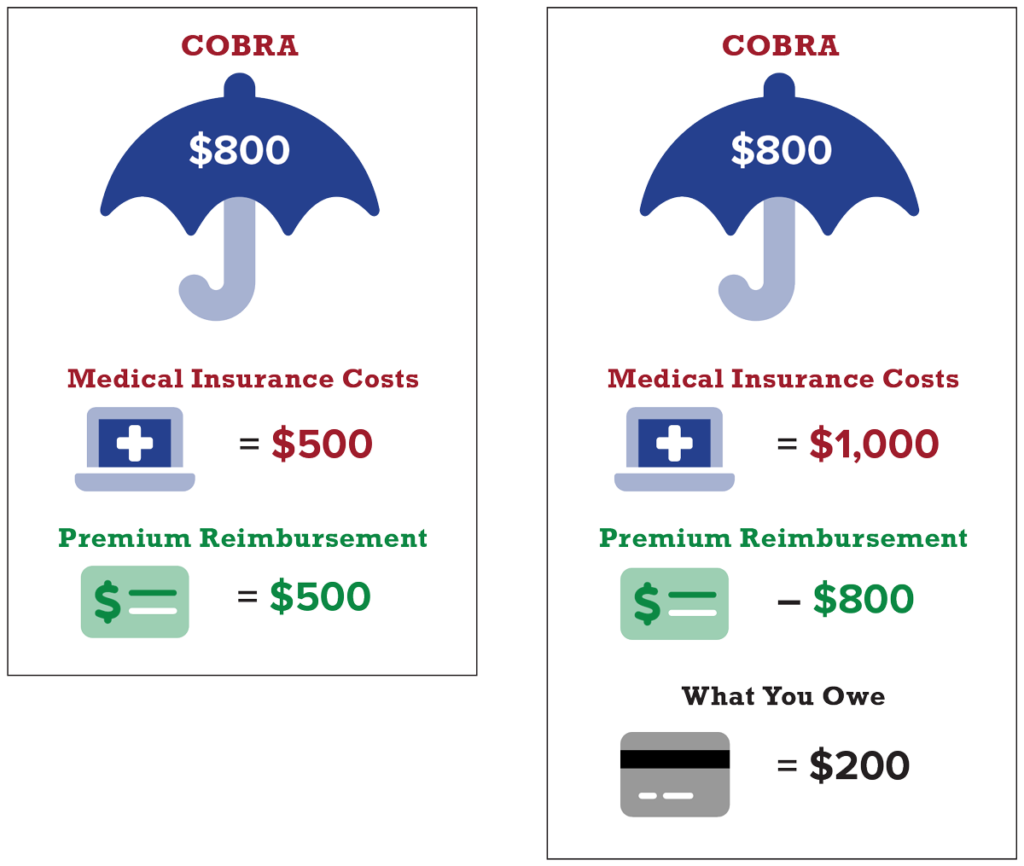
Example
COBRA covers you up to $800. Your medical insurance costs are $500. Your premium reimbursement is $500.
If your medical insurance costs are $1,000, your total reimbursement is $800—the full COBRA coverage you are entitled to. You will not be reimbursed for the additional $200 toward your medical insurance.
If you are receiving a catastrophic duty disability benefit and you are capable of performing substantial gainful activity or employment, or your average earnings exceed the monthly limit, your benefit will automatically convert to a duty disability benefit, and you’ll no longer be reimbursed for your medical premiums.
If you are able to perform in a LEOFF-eligible position, your benefit will be terminated.
Disaster Response Disability Claims
There are circumstances when you might qualify for disaster response benefits and service credit. In the two situations below, your disability must have occurred while you were in eligible federal service providing eligible emergency management services.
- Working for a LEOFF 2 Plan employer: You might qualify for a disability benefit if you leave the department to provide disaster response for another LEOFF 2 Plan employer and become disabled. Your benefit won’t be reduced if you retire early. The benefit will be at least 10% of your Final Average Salary.
- Working in eligible federal service: You might qualify for service credit for a leave of absence if you become disabled while you leave the department to provide disaster response for an eligible federal agency.
How to Apply for a Disability Retirement
The DRS recommends contacting a DRS Retirement Specialist if you plan to apply for a LEOFF 2 disability retirement. Call the DRS to request an official estimate of your disability retirement amount. It takes about three to four weeks for the DRS to calculate your benefit. The DRS will then mail you a packet with the estimate and a three-part form. You, the city, and your doctor will need to complete all three forms in the packet.
Once the DRS receives your completed application and all supporting documentation, it usually takes about four to six weeks to determine your eligibility for a disability retirement.
Note that if you are awarded a disability retirement, 10% of your pension will be tax-free.
How Long Will It Take for a Determination to be Made?
An initial determination can be made within four to six weeks of DRS receiving all three parts of the application and the required documentation.
Please send the following with your disability application:
- All medical records, reports, and charts related to your disabling condition.
- Complete physician information, especially if you are being treated by more than one doctor.
- Clarification from your employer regarding your job specifications.
- Department of Labor and Industries or self-insurer file documentation, such as the Report of Accident, Independent Medical Examinations, and vocational records.
- If you are applying for catastrophic disability, also send DRS a copy of your Social Security Administration disability award letter and any additional medical information the Social Security Administration provides.
You may apply for disability retirement from DRS before separating from employment. If you have already separated, you may still apply for disability retirement as long as you were disabled at the time of your separation.
What is the Lump-Sum Payment Option?
If your monthly benefit will be less than $50, you may choose between a monthly benefit and a lump-sum payment.
If you choose the lump-sum payment, you are considered retired from LEOFF. If you choose a monthly benefit, you cannot take a lump-sum payment later.
What Happens Once I Receive a Determination from DRS?
If you receive a denial, you may petition for review within 120 days of receiving your denial letter. If your petition is denied, you will be informed of appeal procedures. You will have 60 days to appeal the decision.
If you are approved, DRS will mail you an approval letter with additional information. You must separate from employment to begin receiving your monthly disability benefit.
If you have not separated from employment within 90 days of your approval date, DRS will rescind its approval. If that happens, you must reapply and submit current medical evidence to be considered for a disability benefit.
Your retirement date is the first of the month following your separation date. For example, if your application is approved on May 4th, and you separate from service on May 15th, your retirement date is June 1st, and you will receive your first monthly benefit on the last working day of June.
Could I Be Eligible for Other Disability Benefits Outside DRS?
You might also be eligible for disability-related benefits from the Department of Labor and Industries (workers’ compensation), the Department of Social and Health Services, the Social Security Administration, your employer, and disability insurers.
Except for catastrophic duty disability, benefits from the Social Security Administration, the Department of Labor and Industries, or other disability insurers do not affect your DRS benefit amount. However, your DRS benefit could affect other benefits.
For more information, contact these organizations directly.
For More Information on Your LEOFF 2 Disability Benefits
Visit the Disability Benefits section of the LEOFF Plan 2 website for information on your disability benefits, the application process, payments, and more.